As an animator, you don't need to stay on the traditional animation career path.
Illustrators
As an animator, you will draw so much and do a lot of research. It's not a big step to go from animator to illustrator because most of the time your viewers are the same (children). The big step would be working on your own and you will most likely have a freelance career as an illustrator. But this career path will help you embrace your own style and you will improve your artwork a lot. You will need to choose your niche and from them gather inspiration and draw a lot. Your best friend would be experimentation.
http://www.wikihow.com/Be-an-Illustrator
http://artbistro.monster.com/benefits/articles/10995-8-steps-to-becoming-an-illustrator
Showing posts with label Animation. Show all posts
Showing posts with label Animation. Show all posts
Monday, March 21, 2016

Sunday, March 20, 2016
3 Tips for gaining an animation career
1. Draw everyday
I can't stress the importance of drawing every day, the more you draw the better you get.
2. Work on something
The best way to get noticed in any creative field is to make something. If you are a loner it's okay to do animation by yourself even though people tell you otherwise. You will at some point work with a team so its best to gain experience in teamwork. You can do animation shorts by yourself if you are willing to put the time in. Upload whatever you make to YouTube or other media platforms. Get feedback and develop some thick skin. Only pay attention to quality feedback not the negative comments that are common on YouTube and elsewhere.
3. Network
Start a team and work on a project together. Pick the right people and develop an idea together. Like I said before you will work in teams later on so you need as much experience in a team as possible. Just make sure you make a team built on quality animators, not lazy ones. There will be some people who have no idea what they are doing and will waste time by talking or doing something different from what they are supposed to do.
Bonus
Companies like Pixar will still hire you if you don't do 3D animation. They will take you on if you are really skilled at handrawn animation. If you are good enough they will teach you how to do 3D ainmation.
I can't stress the importance of drawing every day, the more you draw the better you get.
2. Work on something
The best way to get noticed in any creative field is to make something. If you are a loner it's okay to do animation by yourself even though people tell you otherwise. You will at some point work with a team so its best to gain experience in teamwork. You can do animation shorts by yourself if you are willing to put the time in. Upload whatever you make to YouTube or other media platforms. Get feedback and develop some thick skin. Only pay attention to quality feedback not the negative comments that are common on YouTube and elsewhere.
3. Network
Start a team and work on a project together. Pick the right people and develop an idea together. Like I said before you will work in teams later on so you need as much experience in a team as possible. Just make sure you make a team built on quality animators, not lazy ones. There will be some people who have no idea what they are doing and will waste time by talking or doing something different from what they are supposed to do.
Bonus
Companies like Pixar will still hire you if you don't do 3D animation. They will take you on if you are really skilled at handrawn animation. If you are good enough they will teach you how to do 3D ainmation.
To my anime loving animators: Sorry
The tip of the day is don't let your art be fully inspired by anime. Most American schools do not like it if your artwork is inspired by anime. I've heard of some wonderful artists getting lower grades because their animation has anime influence even when they are stellar animators. A teacher told us that this because that is not the style of American animation. There are only a few animation companies that hire people that have a portfolio with an anime influence. Sure, you can always try to go to Japan but that is harder than it sounds. Even if you do get accepted by a studio there, you will start at the bottom of the hierarchy.
This was hard for me, as I was influenced by Studio Ghibli work. Generally, speaking anime is not good in western standards because they don't really follow all of the principles of animation. There are a few exceptions like Hayao Miyazaki movies, Cowboy Bebop, etc. You have to be careful where you draw influence from. I know the school I went every single young person was influenced by at least one anime.
This was hard for me, as I was influenced by Studio Ghibli work. Generally, speaking anime is not good in western standards because they don't really follow all of the principles of animation. There are a few exceptions like Hayao Miyazaki movies, Cowboy Bebop, etc. You have to be careful where you draw influence from. I know the school I went every single young person was influenced by at least one anime.
Three Animation careers explained: Inbetweener, Key Animator, and Storyboard artist
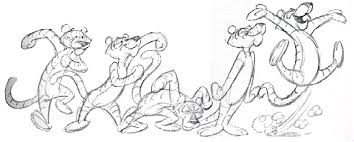
Inbetweener will probably be your first job in animation, it's the lowest on the hierarchy. An Inbetweener creates the movement between key animation. Basically, you create what happens between point A and point B. http://creativeskillset.org/job_roles/364_inbetweener
Key Animator
You may get promoted to this job after a few years depending on your work. At times, this role can be referred to as a senior animator. You draw the key animations which you give to the inbetweeners to connect the movements together. This role appears to be slightly easier than being an inbetweener.
http://www.animationcareerreview.com/articles/key-animator-career-profile

Storyboard Artist
A storyboard artist is a very valuable position as they are usually hired in pre-production. They often will showcase the entire story in order to attract attention to get the project approved during a pitch. It takes a lot of work to do this and it can be a tiring process of drawing storyboards every day. As a Storyboard artist many career fields are open to you.
http://creativeskillset.org/job_roles/349_storyboard_artist_animation

I provided links to quality sources that will help explain more and give you an idea if you would like to pursue that career.
Have a good day!
*none of the art provided is of my work, I claim no right to the artwork. They are of free domain.
Key Animator
You may get promoted to this job after a few years depending on your work. At times, this role can be referred to as a senior animator. You draw the key animations which you give to the inbetweeners to connect the movements together. This role appears to be slightly easier than being an inbetweener.
http://www.animationcareerreview.com/articles/key-animator-career-profile
Storyboard Artist
A storyboard artist is a very valuable position as they are usually hired in pre-production. They often will showcase the entire story in order to attract attention to get the project approved during a pitch. It takes a lot of work to do this and it can be a tiring process of drawing storyboards every day. As a Storyboard artist many career fields are open to you.
http://creativeskillset.org/job_roles/349_storyboard_artist_animation
I provided links to quality sources that will help explain more and give you an idea if you would like to pursue that career.
Have a good day!
*none of the art provided is of my work, I claim no right to the artwork. They are of free domain.
Animation tip: watch quality animation
Sorry for any animated TV show fans but the shows you watch are probably not of good animation quality. Why? Most shows won't be because of the time frame in which the episodes have to be released. You have one week to work on the script, voice actors, and the animation. So shows like the Flintstones, Steven Universe, and the Amazing World of Gumball are examples of poor quality animation. Avatar the Last Airbender is probably the best piece of animation in US TV simply because of the quality of animation is closer to a film like production than other TV shows.
Archer is a poorly animated show, especially the first season but it gets better after each season. Any amateur can spot why Archer is considered poor quality. Don't get me wrong, I am a loyal watcher of Archer it's like a guilty pleasure.
A few good animation Films
A Nightmare Before Christmas
Spirited Away
Dumbo
Wallace and Gromit Series
The Illusionist
Triplets of Belleville
Books that will be valuable for animators
1. The Animator's Survival Kit by Richard Williams
2. Illusion of Life by Frank Thomas and Ollie Johnson
This is the bible for animators, every single animation teacher I've had told us to get our hands on this book. I did and it helped improve my animation a lot and helped develop a better understanding of the process of animation. Richard Williams is a well-respected animator with credits like the director of A Christmas Carol (1971), animation director of Who Framed Roger Rabbit? and so many others. The good thing about this book is your ability to find. Almost every library in my city has a copy of this book, you should try to see if yours does too.
2. Illusion of Life by Frank Thomas and Ollie Johnson
You can find this book online for free, just do a google search and I'm sure you will find yourself a copy. Frank and Ollie are two Disney masters with Ollie being the animation director of Disney's Pinocchio (1940) and Frank is responsible for some of the most memorable animation scenes like the spaghetti scene in Lady and the Tramp, the dancing penguins in Mary Poppins, and so many others. This one is really good at teaching the principles of animation and uses a lot of quality references. Although, there appeared to be more artwork in the first book I mentioned.
Saturday, March 19, 2016
2 Tips for Animation students
1. Learn to draw from life/Anatomy
To be a successful artist and animator you will need to draw from life. If you can't you will have a hard time finding a job after school. You need to know realistic anatomy in order to understand to manipulate anatomy creatively. If you attend any kind of school, you will probably be put into an observational drawing course, anatomy courses, and other realistic drawing courses before you get to do fictional work. You will see yourself get better each time you draw, remember that when you get frustrated. Trust me you will be frustrated but it's okay, you have to keep yourself motivated and never compare yourself to someone else.
Here are a few resources:
http://www.paintdrawpaint.com/p/anatomy-basics.html
https://zygotebody.com/
2. Draw Everyday
This should probably be the first thing every teacher tells you. My teacher explained it as "pencil mileage", the more you use it the better you get. He's right, I have improved so much since I started to take art seriously about 4 years ago now. I had to struggle to get where I am at, am I that good? No, I have improved but I haven't reached the level I want to reach. I don't let that get me down instead I keep my head up (2pac reference) and draw every single draw even if its only for one minute.
Tips on how to make drawing a part of your daily life:
http://hubpages.com/art/draw-drawing-every-day-creative-hobby-sketchbook-journal
To be a successful artist and animator you will need to draw from life. If you can't you will have a hard time finding a job after school. You need to know realistic anatomy in order to understand to manipulate anatomy creatively. If you attend any kind of school, you will probably be put into an observational drawing course, anatomy courses, and other realistic drawing courses before you get to do fictional work. You will see yourself get better each time you draw, remember that when you get frustrated. Trust me you will be frustrated but it's okay, you have to keep yourself motivated and never compare yourself to someone else.
Here are a few resources:
http://www.paintdrawpaint.com/p/anatomy-basics.html
https://zygotebody.com/
2. Draw Everyday
This should probably be the first thing every teacher tells you. My teacher explained it as "pencil mileage", the more you use it the better you get. He's right, I have improved so much since I started to take art seriously about 4 years ago now. I had to struggle to get where I am at, am I that good? No, I have improved but I haven't reached the level I want to reach. I don't let that get me down instead I keep my head up (2pac reference) and draw every single draw even if its only for one minute.
Tips on how to make drawing a part of your daily life:
http://hubpages.com/art/draw-drawing-every-day-creative-hobby-sketchbook-journal
Supplies needed to do Animation
First off you need to at least try hand-drawn animation because a lot of studies won't hire you if you can draw traditionally. Next task you will also need to know the basics of 3-D animation as it is the main way to animate now.
1. Light board
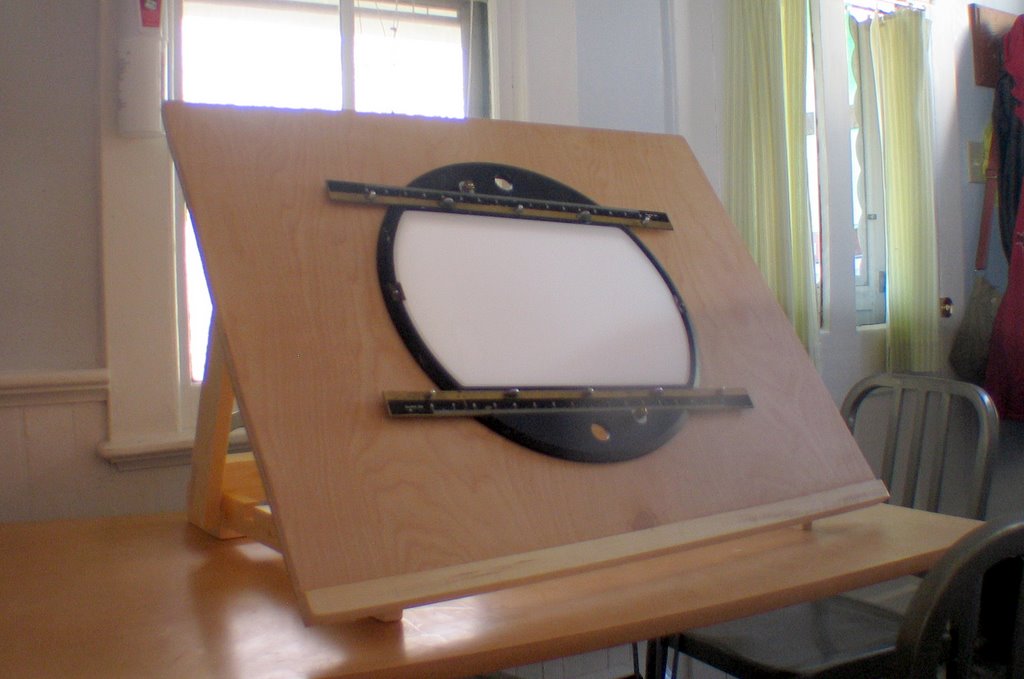 You will need a light board to trace your artwork, so you are more consistent. You can creative and make your own to save money. I know one student put a light under a glass table and just kept his papers in place with tape which worked well.
There is just for 2-D animators, I've seen some as low as 44 dollars and some as high as 200 dollars. If you don't have a big budget feel free to get creative, you don't really need to show anyone your workspace as they will only care about your artwork.
2. Portable Hard drive
 Good for storing scanned artwork, storyboards, and 3-D based projects. 3-D animation based projects will take up a lot of memory. Most end up having several GBs, so a normal flash drive might not be beneficial to you. These tend to last later but you should back up everything on some kind of cloud based software.
3. Sketchbook
 This should be a given, everyone can benefit from having a sketchbook. It's best to carry an appropriately sized one because you will most likely carry it with you everywhere. It's best to get a spiral one as it is easier tear the paper out.
1. Light board
 You will need a light board to trace your artwork, so you are more consistent. You can creative and make your own to save money. I know one student put a light under a glass table and just kept his papers in place with tape which worked well.
There is just for 2-D animators, I've seen some as low as 44 dollars and some as high as 200 dollars. If you don't have a big budget feel free to get creative, you don't really need to show anyone your workspace as they will only care about your artwork.
2. Portable Hard drive
 Good for storing scanned artwork, storyboards, and 3-D based projects. 3-D animation based projects will take up a lot of memory. Most end up having several GBs, so a normal flash drive might not be beneficial to you. These tend to last later but you should back up everything on some kind of cloud based software.
3. Sketchbook
Subscribe to:
Posts (Atom)